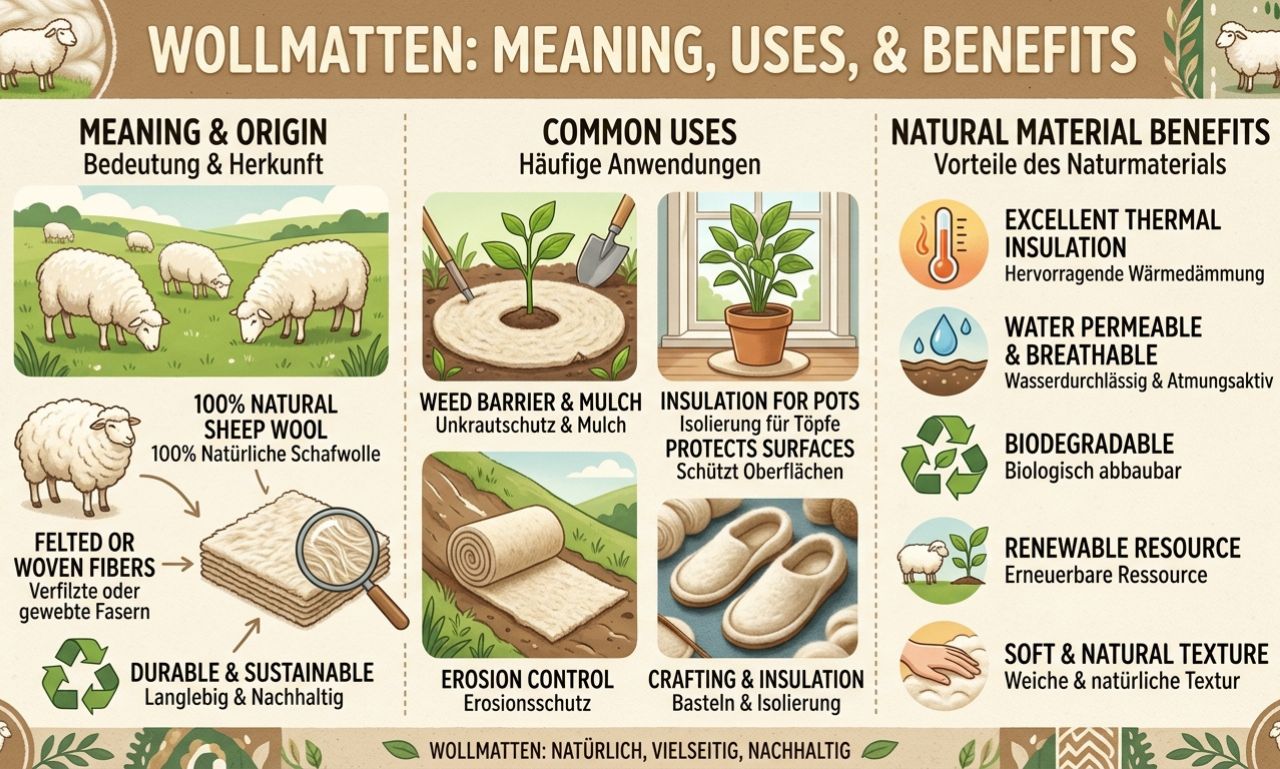
Wollmatten is a German-derived term that refers to wool mats or wool matting materials used in construction, gardening, insulation, and environmental applications. The word combines “Woll” (wool) and “Matten” (mats), describing natural fiber-based mats made from sheep wool.
These mats are increasingly used as an eco-friendly alternative to synthetic materials due to their durability, sustainability, and natural insulating properties.
What Is Wollmatten?
Woll matten are mats made from compressed or woven natural wool fibers. They are designed to serve functional purposes such as:
- insulation in buildings
- soil protection in gardening
- erosion control in landscaping
- moisture regulation in agriculture
Because they are made from natural wool, they are biodegradable and environmentally friendly.
Main Uses of Wollmatten
1. Building Insulation
One of the most common uses of Woll matten is in eco-friendly construction. Wool naturally provides:
- thermal insulation (heat retention)
- sound absorption
- moisture regulation
This makes it useful for insulating:
- walls
- roofs
- floors
- wooden structures
Compared to synthetic insulation, wool mats are safer and more breathable.
2. Gardening and Agriculture
In gardening, Woll matten are used to:
- protect soil from drying out
- reduce weed growth
- maintain soil temperature
- improve moisture retention
Farmers and gardeners often use them around plants, trees, and garden beds as a natural ground cover.
3. Erosion Control
Woll matten are effective in preventing soil erosion, especially in:
- sloped land areas
- riverbanks
- construction sites
- landscaping projects
They hold soil in place while still allowing water and air to pass through.
4. Environmental Protection
Because they are biodegradable, Woll matten are used in:
- ecological restoration projects
- sustainable land management
- reforestation efforts
Over time, they naturally decompose and enrich the soil.
Benefits of Wollmatten
1. Eco-Friendly Material
Made from natural wool, they are renewable and biodegradable.
2. Excellent Insulation
Wool naturally regulates temperature and humidity.
3. Moisture Control
Wool fibers can absorb and release moisture without losing structure.
4. Chemical-Free
Unlike synthetic insulation, Woll matten do not contain harmful chemicals.
5. Durable and Flexible
They can be cut and shaped easily for different applications.
How Wollmatten Are Made
The production process generally includes:
- Collecting natural sheep wool
- Cleaning and removing impurities
- Pressing or weaving fibers into mats
- Treating for durability and pest resistance (if required)
- Cutting into sheets or rolls
This process ensures the mats remain strong while retaining natural properties.
Why Wollmatten Are Becoming Popular
The demand for Woll matten is increasing because of global interest in sustainable and green building materials. They are widely appreciated in:
- eco-construction industries
- organic farming
- landscape architecture
- environmental engineering
Their natural composition makes them a strong alternative to plastic-based materials.
Wollmatten vs Synthetic Mats
| Feature | Wollmatten | Synthetic Mats |
|---|---|---|
| Material | Natural wool | Plastic / fiberglass |
| Eco-friendly | Yes | No |
| Biodegradable | Yes | No |
| Insulation | High | High |
| Safety | Chemical-free | May contain chemicals |
Final Thoughts
Woll matten represent a sustainable and practical solution for insulation, gardening, and environmental protection. Made from natural wool fibers, they offer a balance of performance and eco-friendliness that modern industries increasingly value.
As the world shifts toward greener materials, Woll matten continue to grow in popularity as a reliable, biodegradable, and versatile option for both construction and environmental applications.