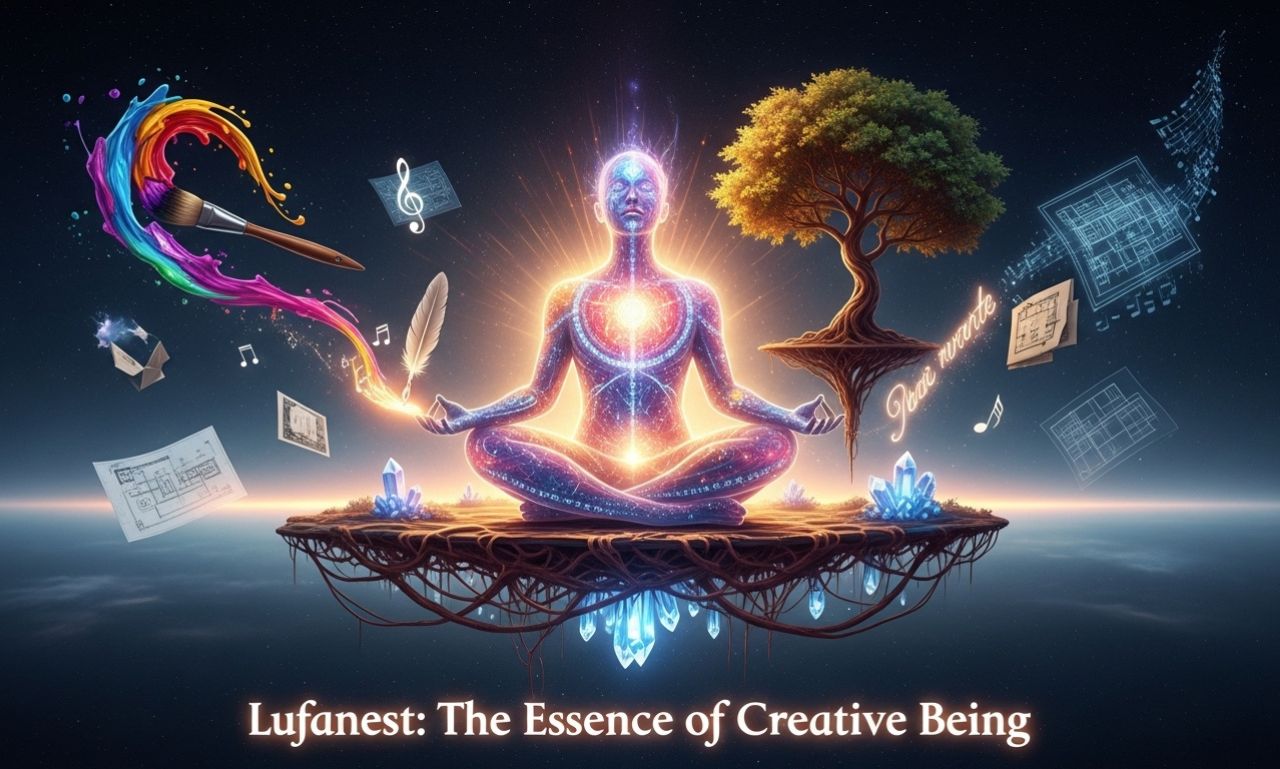
In the ever‑evolving world of language and imagination, new terms emerge that challenge our understanding, invite curiosity, and stimulate thought. Lufanest is one such word — mysterious at first glance, yet ripe with potential meaning once we unpack its rhythm, sound, and underlying energy.
What Is Lufanest?
Though Lufanest doesn’t appear in any formal dictionary, its very structure hints at something evocative and kinetic. The word blends soft vowels with a decisive consonant ending, creating a sense of both flow and finality — as if it were coined to express a concept just beyond ordinary language.
At its core, we can imagine Lufanest representing:
-
A state of balanced creativity
-
A moment of intuitive clarity
-
An inner force that harmonizes passion with purpose
In essence, Lufanest may best be understood not as a static definition but as a felt experience.
The Sound and Feel of the Word
Pronounced (loo‑fuh‑nest), Lufanest carries a poetic cadence:
-
Loo evokes softness and fluidity
-
Fuh grounds the sound in warmth
-
Nest suggests comfort, sanctuary, and formation
Put together, Lufanest feels like a word that could describe the heart of inspiration itself — a creative nucleus where ideas take wing.
Imagined Meanings of Lufanest
Since Lufanest doesn’t have a fixed definition, let’s explore some possible conceptual interpretations:
1. Creative Equilibrium
Lufanest might describe the balance between imagination and discipline — that inner harmony where innovation feels effortless.
“When her ideas finally aligned, she entered a state of pure Lu fanest.”
2. A Place of Renewal
Symbolically, Lu fanest can be thought of as an inner sanctuary — a mental refuge where one finds inspiration and strength.
“He retreated into his mind’s Lu fanest, and from there his best work was born.”
3. A Philosophical State
In a broader context, Lufa nest could represent the ideal state of human expression — where thought, emotion, and purpose converge.
Lufanest in Culture and Creativity
Just as iconic terms like serendipity and sonder have enriched our emotional vocabulary, Lufa nest could become a symbolic term in literature, art, and philosophy. Poets might use it to describe intangible beauty; musicians might adopt it to signify a unique flow of rhythm and feeling; thinkers might invoke it in discussions of consciousness and creativity.
In storytelling, Lufa nest could even be the name of a mythical place — a realm where ideas are born and nurtured before entering the human mind.
Why Invent Words Like Lufanest?
Creating new words isn’t merely linguistic play — it’s a way of expanding human experience. Words give shape to previously unnamed emotions, states, and visions. When language evolves to include new internal landscapes, we gain tools for deeper connection with ourselves and others.
Lufa nest invites us to imagine, to define our own meaning, and to explore how language and creativity intertwine.
Conclusion
While Lufa nest may not (yet) belong to any official lexicon, its potential meaning transcends mere letters. It stands as a symbol of that elusive creative force — the profound state where ideas flow freely and purpose shines with clarity.
Whether adopted into poetry, philosophy, or everyday reflection, Lufa nest reminds us that language is as alive as the imagination that shapes it.